


Greece and it΄s trajectory around the Greek economy
The economy of Greece is getting worse, more and more people and especially families are now living below the poverty line, unable to pay their rent, their bills and even more their most basic daily needs. A huge portion of the population, almost 86%, is in a difficult position to cope financially and the tax burden is increasing at a rapid pace.
But let’s start from the beginning, the catering establishments, has increased its prices a lot for a long time now, so that just to have a coffee in a cafe, automatically makes it a luxury, followed by pastry shops and bakery and finally supermarkets, that is the joy of the housewife, has ceased to be, as the main necessities have increased rapidly and continue rising, such as cheese, milk, yogurt, vegetables, fruits and also baby milk. As for the traditional virgin olive oil that is honored by Greek people, especially from villages, in their salad, and the famous Greek cheese (feta), let’s consider them as unaffordable products, as their prices are literally “burning”.
However, we could say that most of the companies are contributing positively to this economic crisis, with various promotions and discounts, but the situation is not saved. If we take a look at the domestic supermarkets, we will observe that prices reflects the real situation in the country, if we compare them with the average from other European countries, we can easily understand that prices in Greece are often higher than those in many other European countries. Thoroughly we will notice that inflation in Greece rose in the month of December 2023, an increase of 3. 7% compared to the fall to 2. 9% in the month of November, according to Eurostat data.
The most important factor to reduce inflation at a general level, is to mitigate food prices, that continues to rise more and more last year with an annual growth rate in November of 6. 8% for the Eurozone as a whole and 8. 8% for Greece. Also, an increase in tolls has been observed since the beginning of the year of 2024 on all road axes in Greece, a fairly large increase of 7. 6%.
Unemployment, low wages combined with the continuous growth of the economy is slowly leading the country to paralysis. The reduction of unemployment is related to how easily companies can recruit staff and labor force according to their needs. The mismatch between demand and supply of jobs delays the reduction of unemployment and if combined with the low participation of women in the labor force, this also has a major impact on the rate of growth. Speaking in a more general context, the year of 2024 was a transitional period for the Eurozone economy, with inflation falling significantly, because of wage pressures and through labor shortages, but it is not estimated that energy prices, which have already fallen significantly, would had affected by interest rate reductions, to be a prospect after two years of continuous increases. In short, it is predicted that the Greek economy will grow rapidly relative to the Eurozone.
A positive sign, was also the country’s tourism for 2023, which compared to the previous year was obviously more prosperous, with revenues increasing. We would venture to say, with a slight caveat, that the strong reservations was made last year, either they were too early or they were last-minute reservations, was expected to in 2024, as they are also coming from older and higher income customers, while the longest waiting time is seen in the middle age and middle income groups.
The most important sector of the Greek economy, must adopt essential concepts such as “urgency” and management of destinations that will constitute the potential for the further development and strengthening of tourism in the coming years. So the Greek economy will be positively affected if tourism revenues exceed expectations again.
Moreover, there is concern about property prices, at a very high level compared to previous years, as Greece is considered a champion in housing costs from whole Europe, both for those who lives in cities and also for those who lives in rural areas.
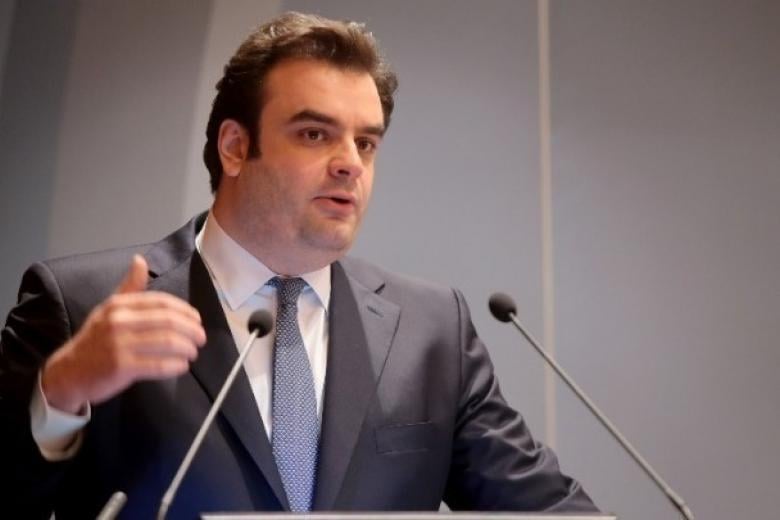
Following to his recent meeting with OECD Secretary-General Matias Cormann, the Minister of National Economy and Finance Kyriakos Pierrakakis made statements to the public television of ERT and journalist Thomaida Papaiwannou on the sidelines of the Ministerial Conference in Paris. The Minister of National Economy and Finance stated that:
Greece, strong growth is forecast for 2025 and 2026, at over 2%, mainly due to the increase in households’ disposable income and the explosive rise in investments. However, this is not the only finding of the Report. There is also a reference to the de-escalation of inflation, to achieving primary surpluses – something we have already achieved and we expect to continue, in order to further reduce the public debt. The overall reflects an economy with resilience and strong prospects. This was the message I had the opportunity to convey to my counterparts at the OECD Ministerial Council Meeting. Greece is trying to take a leading role, especially in Southeast Europe, in the green and digital transitions. According to the site: https://minfin.gov.gr


